
ASAL Humanitarian Network (AHN)
WATERED HOPE: A COMMUNITY-LED RECOVERY STORY FROM WEST POKOT
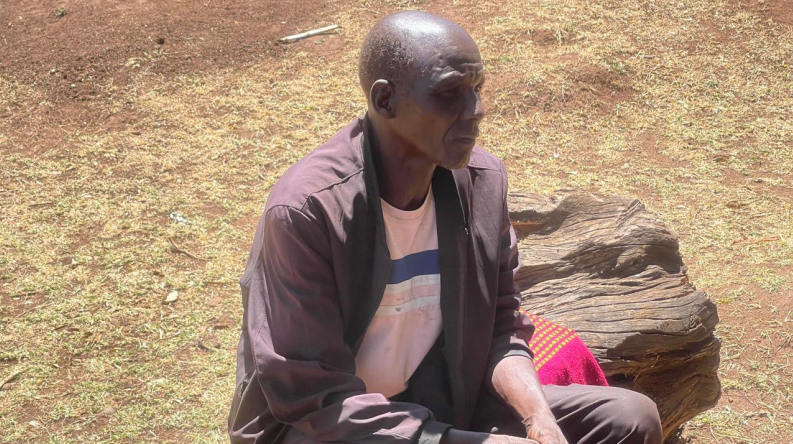
Yaralima Domokwang: The Man Who Carved Hope from Limestone
How one elder’s sacrifice restored water, revived farms and inspired lasting resilience in Mochowon Village
Watered Hope
In the quiet hills of Mochowon Village, West Pokot, the year 2019 is remembered not for the harvest, but for the day the earth moved.
Weeks of relentless rain turned the familiar slopes into a chaotic tide of mud and debris. Landslides and floods tore through the valley, burying the lush trees and fertile farmlands that the community had relied on for generations.
When the waters finally receded, they left behind a landscape of despair. Livelihoods were gone, and the few remaining water sources were choked with silt and rocks. For the families of Mochowon, the future looked as barren as the mud-slicked fields.
Triggered by an intense twelve-hour downpour on 22nd and 23rd November 2019, massive landslides and mudslides swept down the steep hillsides of Pokot Central and Pokot South. The extreme rainfall was driven by an exceptionally strong positive Indian Ocean Dipole, making the late 2019 rainy season one of the wettest recorded in East Africa in 40 years, with rainfall reaching up to 400% of the seasonal average.
The Scale of the Crisis
According to humanitarian assessments compiled by the Kenya Red Cross Society and the United Nations Office for the Coordination of Humanitarian Affairs (UN OCHA), the impact was catastrophic.
Nationwide, the floods and landslides affected more than 160,000 people and left nearly 18,000 people displaced across 31 of Kenya’s 47 counties.
In West Pokot, the disaster was particularly severe. Landslides buried residential structures, claimed the lives of 72 residents and displaced more than 10,000 people across the county. Among the worst-affected villages were Nyarkulian, Parua, Sebit, Tamkal, Muino and Batei.
West Pokot’s vulnerability to such disasters is compounded by its geography and environmental conditions. As a semi-arid area characterised by high altitudes and steep mountain slopes, the region is naturally susceptible to soil instability. Severe soil erosion and progressive deforestation have stripped many hillsides of the root structures that help hold soil together.
When torrential rain strikes, the soil can quickly become unstable and collapse.
For the subsistence farming community of Mochowon Village, within the Sebit area, the 2019 disaster washed away vital topsoil, destroyed homes and completely choked local water sources with mud and heavy boulders, plunging families into an acute humanitarian crisis.
A Personal Sacrifice
As the village struggled to find its footing, one elder, Yaralima Domokwang, refused to wait for a miracle.
Yaralima had spent years working hard and selling limestone to build up savings of KES 200,000. While the money could have been used to secure his own family’s comfort during the crisis, Yaralima saw a deeper need within his community.
“I saw my people suffering, and I knew I had to do something. I didn’t have much, but I believed that if we could bring water back to our farms, we could grow food again.”
Armed with his savings and a vision, Yaralima gathered a small team of neighbours.
Together, they began the gruelling work of hand-digging a furrow to channel water from a distant river back to the parched village.
It was an extraordinary community effort, but the task was difficult. Without proper reinforcement, the handmade channel remained fragile. It was vulnerable to heavy rain and was constantly blocked by debris.
Still, Yaralima and his neighbours had demonstrated something important: the community already had an idea for its own recovery. What it needed was support to make that solution stronger and more sustainable.
From Local Action to a Lasting Solution
Yaralima’s determination eventually caught the attention of Leah Psiya, Executive Director of the Pokot Women Empowerment Organization (POWEO).
Inspired by his determination, POWEO, supported by the ASAL Humanitarian Network (AHN) and funded by the Center for Disaster Philanthropy (CDP), stepped in to help transform Yaralima’s vision into a more permanent solution.
With a grant of KES 250,000, the project shifted gears.
What had begun as a hand-dug trench was improved with concrete lining and reinforced intake points designed to withstand the elements.
The furrow was also extended, allowing water to reach further into the village, the local market and schools.
But perhaps the most important change was not made of concrete.
It was made of knowledge.
Community members received training in climate-smart farming, helping them make better use of the restored water while strengthening their ability to cope with changing environmental conditions.
The community also established a collective savings fund, reducing dependence on the personal savings of any one individual and creating a stronger foundation for future community-led action.